
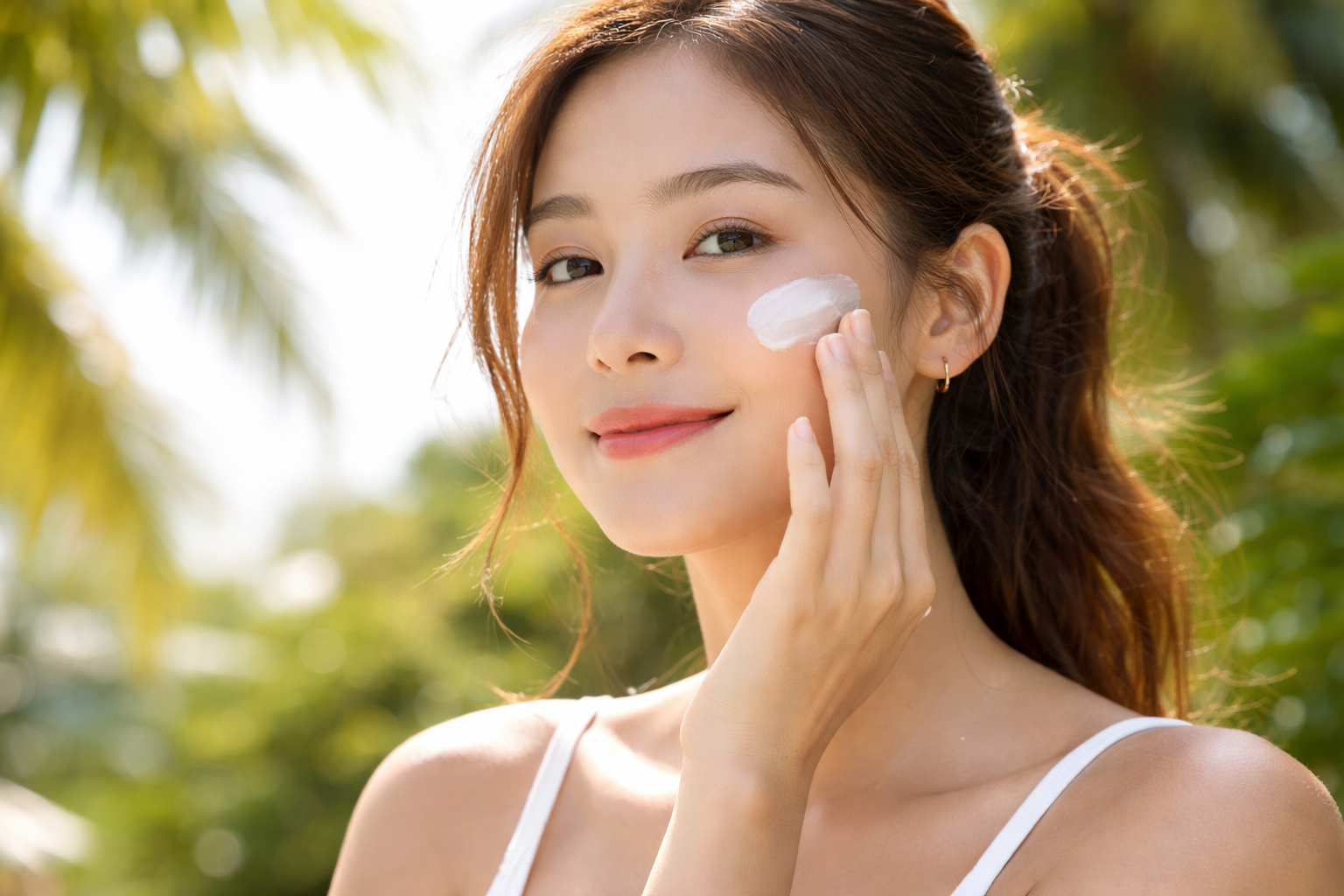
Thailand is a paradise for travelers, but it can be a battlefield for your skin barrier. The combination of extreme humidity (often exceeding 90%), intense UV levels, urban pollution, and the freezing blast of indoor air conditioning creates a unique stress test for your face.
Many visitors and new expats find that the expensive, heavy creams they used in Europe or North America suddenly feel suffocating or cause rapid breakouts in Bangkok. Conversely, skipping moisturizer entirely due to sweat can lead to paradoxical dehydration and oil overproduction.
This guide provides a scientifically grounded framework to adapt your skin care routine to the tropics. It moves beyond generic advice to offer a climate-specific strategy that balances hydration, protection, and breathability.
Understand Thailand’s Climate: What It Does to Skin
Before buying new products, you must understand the environmental aggressors you are fighting. Thailand’s climate isn’t just “hot”; it’s a specific mix of moisture and radiation that alters skin physiology.
The TEWL Paradox
In high humidity, sweat doesn’t evaporate; it sits on the skin. This traps heat and sebum, creating a breeding ground for bacteria (acne) and yeast (fungal acne). However, moving constantly between 35°C (95°F) streets and 20°C (68°F) shopping malls shocks the skin capillaries and dehydrates the surface, leading to a confused barrier that is both oily and tight.
The Environmental Impact Table
| Climate Factor | What You’ll Notice on Your Skin | Required Routine Adjustment |
|---|---|---|
| High Humidity (>75%) | Sticky sensation, dilated pores, increased oil flow. | Switch to gel/water-based textures. Avoid thick occlusives (Shea butter, heavy silicones). |
| UV Index (11+ Extreme) | Rapid darkening, melasma flare-ups, heat rash. | Sun protection is non-negotiable. Reapplication every 2 hours is mandatory outdoors. |
| Sweat + Friction | “Acne Mechanica” (breakouts where glasses/masks rub). | Use hypochlorous acid sprays or gentle cleansing wipes mid-day. |
| Air Conditioning (A/C) | Sudden tightness, dry patches, dullness. | Layer a lightweight hydrator (glycerin/hyaluronic acid) under sunscreen. |
| Urban Pollution (PM2.5) | Greyish tone, inflammation, clogged pores. | Double cleansing at night is essential to remove particulate matter. |
The “Thailand Routine Framework” (6 Simple Rules)
To survive the climate, you don’t need more products; you need smarter textures. Follow these six rules to stabilize your skin.
1. Texture Over Potency
In Thailand, the “cosmetic elegance” of a product determines if you will actually use it. If a cream feels heavy, you will sweat it off. Prioritize “water-gel,” “emulsion,” or “essence” textures.
2. The Sunscreen Wardrobe
You need two types of sunscreen: a “city shield” (cosmetically elegant, wears well under makeup) for Bangkok days, and a “beach armor” (highly water-resistant, durable) for island hopping.
3. Hydration ≠ Occlusion
Your skin needs water (hydration), not necessarily oil (occlusion). High humidity provides some ambient moisture, so you can often skip heavy night creams in favor of layerable toners or serums.
4. The Mid-Day Reset
Sweat is salty and alkaline, which can disrupt your acid mantle. Rinsing your face with plain water or using a thermal water mist mid-day can prevent irritation without stripping lipids.
5. Barrier-First Approach
If your skin starts stinging when you apply products, stop all exfoliation immediately. The heat makes skin more reactive. Switch to a “bland” routine (cleanser + moisturizer + sunscreen) until the barrier heals.
6. Nighttime is for Repair
Since you sweat all day, your PM routine is the only time active ingredients stay on the skin long enough to work. Save your expensive serums (Retinol, Vitamin C, Peptides) for the evening.
Decision Tree: Troubleshooting Your Climate Reaction
| If your skin feels… | Likely cause in Thailand climate | What to do (action) |
|---|---|---|
| Sticky & oily all day | Humidity + heavy layers trapping sweat | Switch moisturizer to a gel or skip AM moisturizer. Add niacinamide serum to help balance oil. |
| Dry & tight (but you’re sweating) | Dehydration from AC + sun exposure | Add a hydrating toner/essence (glycerin-rich) before sunscreen. Keep layers light. |
| Red, itchy & hot | Heat irritation / sweat rash / friction | Stop acids & retinoids. Use aloe or centella gel. Cool skin (fan, cold compress). |
| Bumpy / clogged (whiteheads) | Pore congestion from sweat + SPF buildup | Add salicylic acid (BHA) 2–3×/week at night. Double cleanse after sunscreen/sweat. |
Build Your AM Routine (Thailand Edition)
Your morning goal is simple: Protection and Prevention. Do not overload your skin, or your products will slide off by noon.
Step 1: The Gentle Cleanse
- Action: Wash with a gentle, non-foaming cleanser or just cool water.
- Why: You likely did a heavy cleanse the night before. You don’t want to strip your natural oils right before exposing your skin to harsh UV.
- Texture: Gel or milk.
Step 2: Antioxidant Serum (Optional but Recommended)
- Action: Apply a lightweight Vitamin C or antioxidant serum.
- Why: UV rays in Thailand are strong enough to penetrate sunscreen. Antioxidants neutralize the free radicals that sunscreen misses.
- Texture: Watery liquid. Avoid heavy oils.
Step 3: Lightweight Hydration (The “Moisturizer” Step)
- Action: Assess your skin. If you have oily skin, you might skip a traditional moisturizer and let your sunscreen double as moisturizer. If you have dry skin, apply a light gel-cream.
- Why: Humidity keeps skin moist, but A/C dries it out. A light layer acts as a buffer.
Step 4: Sun Protection (Non-Negotiable)
- Action: Apply 1/4 teaspoon (two finger lengths) of broad-spectrum SPF 50+ PA++++ to face and neck.
- Why: The UV Index in Thailand regularly hits 11+ (Extreme). “Contains SPF” in makeup is not enough.
- Texture: “Water essence” or “milk” formulas work best in humidity.
The Tourist Reality Check
- Sweating? If you are walking to the BTS Skytrain or temples, you will sweat. Do not apply thick layers. Blot sweat gently with a tissue; do not wipe.
- Motorbike Taxis: The wind and exhaust are harsh. Wear sunglasses and a mask to protect the lower face from pollution.
| Step | Best Texture for Thailand | Common Mistake |
|---|---|---|
| Cleanser | Gel or Foam (Low pH) | Using a stripping scrub that causes rebound oiliness. |
| Serum | Water-like liquid | Using an oil-based serum that traps heat. |
| Moisturizer | Gel, Emulsion, or skip | Using a heavy European “Cold Cream.” |
| Sunscreen | Alcohol-based milk or Water Gel | Relying on SPF 15 or 30 (not enough). |
Build Your PM Routine (Remove Sweat + Sunscreen)
The evening is for Recovery and Cleansing. The most critical step in Thailand is removing the day’s accumulation of waterproof sunscreen, sweat, sebum, and PM2.5 pollution.
Step 1: First Cleanse (The Removal)
- Action: Use an oil cleanser, balm, or micellar water. Massage on dry skin to dissolve sunscreen and makeup.
- Why: Water-based cleansers cannot break down water-resistant Thai sunscreens. If you skip this, you will get clogged pores.
Step 2: Second Cleanse (The Wash)
- Action: Follow with a water-based gentle cleanser to remove the oily residue.
- Why: Ensures the skin is completely clean and ready to absorb treatments.
Step 3: Treatment (Rotate Based on Need)
- Acne/Clogged Pores: Salicylic Acid (BHA) or Niacinamide.
- Pigmentation/Sun Damage: Alpha Arbutin, Tranexamic Acid, or Retinol (use with caution).
- Soothing: Centella Asiatica (Cica) or Aloe Vera.
Step 4: Barrier Support Moisturizer
- Action: Apply a moisturizer that contains ceramides or hyaluronic acid.
- Why: You sleep in air conditioning (likely), which is very drying. This layer seals in moisture without the risk of “sweating it off” like in the daytime.
Routines by Skin Type (Thailand-Specific)
Oily Skin / Congestion-Prone in Humidity
Thailand is tough for oily skin types. The heat liquefies sebum, making you look shiny faster.
- Prioritize: Niacinamide (Vitamin B3). It regulates oil production and strengthens the barrier.
- Avoid: Heavy plant oils (Coconut oil, Marula oil) on the face.
- Weekly Plan: Use a clay mask 1-2 times a week to pull impurities from pores.
- Strategy: Your sunscreen is your AM moisturizer. Do not layer a cream underneath it.
Dry / Dehydrated Skin (The A/C Sufferer)
You feel oily outside but tight inside. This is classic dehydration.
- Hydration vs. Occlusion: You need humectants (water-grabbers like Glycerin, Hyaluronic Acid) more than heavy oils.
- Strategy: Use a “hydrating toner” or “essence” immediately after washing face. Layer it twice if needed (“7-skin method” lite).
- Barrier Focus: Use a moisturizer with ceramides at night to repair the damage from temperature fluctuation.
Sensitive / Reactive Skin
Traveling often triggers sensitivity due to “hard” or “soft” water changes and new laundry detergents.
- The Protocol: Stick to a “Bland Routine” for the first 3 days of your trip. Cleanser, Moisturizer, Sunscreen. No actives, no fragrances, no essential oils.
- Water Tip: If your face stings after washing, try rinsing with bottled water. Tap water in some older Thai buildings may have high mineral content or chlorine.
Routines by Situation (Tourist & Expat Scenarios)
Scenario A: “My skin broke out in Bangkok in 3 days”
This is common. It’s usually a mix of heat rash and clogged pores.
The 7-Day Reset Protocol:
- Stop all serums, acids, and anti-aging creams.
- AM: Wash with cool water → Light Moisturizer → Sunscreen.
- PM: Double Cleanse (critical) → Aloe Vera Gel or Cica Balm.
- Treatment: Use a hydrocolloid patch on active spots. Do not squeeze (infection risk is higher in humidity).
Scenario B: “Beach / Islands / Constant Sweating”
You are in Phuket or Samui, sweating profusely.
- Water-Resistant SPF: Switch to a “Sport” or “Outdoor” sunscreen. Reapply every 80 minutes or after swimming.
- Hat: Wear a wide-brimmed hat. SPF cannot do it all.
- After-Sun: Keep a bottle of Aloe Vera gel in the hotel fridge. Apply immediately after showering to cool the skin and stop inflammation.
- No Actives: Do not use Retinol or strong AHAs the night before a full beach day. It increases sun sensitivity.
Scenario C: “I’m getting dark spots / melasma flare”
The UV intensity is triggering melanin production.
- Tinted Sunscreen: Iron oxides in tinted sunscreens offer better protection against visible light, which drives melasma.
- Tyrosinase Inhibitors: Look for serums with Thiamidol, Tranexamic Acid, or Alpha Arbutin. These stop pigment formation safely.
- Cooling: Heat itself triggers melasma. Keep your face cool with a portable fan or cooling mists.
Product-Type Cheat Sheet (What to Look For)
You don’t need to buy specific brands, but look for these keywords and ingredients on the label.
| Category | Ingredients to Look For | Watch-Outs in Heat |
|---|---|---|
| Cleanser | “Low pH”, “Gentle”, “Gel”, “Micellar” | “Scrub”, “Beads”, High-foam (SLS) |
| Hydrator | Hyaluronic Acid, Glycerin, Panthenol (B5) | Heavy oils, Shea Butter (for AM) |
| Sunscreen | “Watery Essence”, “Milk”, “Dry Touch”, Zinc Oxide | “Moisturizing Cream” (may be too heavy) |
| Acne Care | Salicylic Acid (BHA), Tea Tree, Azelaic Acid | Benzoyl Peroxide (can bleach clothes/towels) |
| Brightening | Niacinamide, Vitamin C (Ascorbic Acid) | Lemon/Citrus oils (photosensitizing) |
The Capsule Routine (Travel Light)
If you only have space for 3 items:
- Gentle Cleanser: (Use PM only, or AM/PM).
- Hybrid Moisturizer: A light gel-cream that soothes.
- High-Protection Sunscreen: SPF 50+.
Common Mistakes People Make in Thailand
1. “I don’t need moisturizer because I’m sweating.”
Sweat is not moisture; it’s water and salt. When it evaporates, it dehydrates skin. You still need hydration (water), just not oil.
2. Skipping Sunscreen Reapplication.
Applying once at 8 AM does not protect you at 2 PM. In Thailand’s UV index, chemical filters degrade faster. Carry a sunscreen stick or spray for touch-ups.
3. Over-Exfoliating.
“My skin feels gross/oily, so I’ll scrub it.” This destroys the barrier. A damaged barrier lets in bacteria and UV light, causing more acne and pigmentation.
4. Buying “Whitening” Products blindly.
Many Thai products say “Whitening.” This usually means brightening (Niacinamide), which is safe. However, avoid unbranded creams at markets—stick to Watsons, Boots, or EveandBoy.
FAQ
Why does my skin get worse in Thailand?
It is usually “Acne Mechanica” (heat/friction) combined with “Tropical Acne” (yeast overgrowth due to humidity). The change in water hardness and diet (sugar/dairy) can also play a role.
What SPF should I use in Thailand?
SPF 30 is the bare minimum, but SPF 50+ PA++++ is highly recommended. The “PA++++” indicates protection against UVA rays (aging/pigment), which are very strong in the tropics.
How often should I cleanse if I sweat a lot?
Do not wash your face with cleanser more than twice a day. If you are sweaty mid-day, rinse with plain cool water and pat dry. Over-cleansing signals your skin to produce more oil.
Is Thailand good for skincare routines?
Yes! Thailand has excellent dermatological care and products designed for this exact climate. Local brands (like MizuMi, Srichand, Burnova) are formulated specifically to be non-sticky in heat.
Summary: The 5-Minute Thailand Routine Blueprint
AM Checklist
- Rinse with cool water (or gentle cleanse).
- Apply Vitamin C or Niacinamide serum (optional).
- Apply generous layer of SPF 50+ (wait 10 mins before makeup).
- Pack blotting papers and sunglasses.
PM Checklist
- Double Cleanse (Oil/Micellar first, then Wash).
- Apply soothing toner or essence.
- Apply barrier-repair moisturizer (Ceramides/Hyaluronic Acid).
- Apply spot treatment if needed.
3 Troubleshooting Rules
- If you are red: Stop actives, add Aloe/Cica.
- If you are clogged: Add BHA (Salicylic Acid) 2x week.
- If you are peeling: Stop everything except Cleanser, Moisturizer, SPF.
By respecting the climate and adjusting your textures, you can maintain healthy, glowing skin even in the heart of the Thai heat. Welcome to the tropics—your skin is going to love the humidity if you manage it right.