
Key Highlights
- Yes, foreigners can legally buy and own certain types of Thai property, making the real estate market accessible.
- You can own condominium units freehold in your own name, as long as it’s within the 49% foreign ownership quota.
- Foreigners are prohibited from owning land directly, so alternatives like long-term leases or forming a Thai company are used for villas and houses.
- The property purchase process requires transferring funds from abroad and working with a lawyer for due diligence.
- Phuket, Bangkok, and Chiang Mai are popular locations offering strong investment potential and lifestyle benefits.
Introduction
Have you ever dreamed of owning a piece of paradise in Thailand? You’re not alone. The country’s beautiful landscapes, friendly culture, and affordable living costs attract countless foreign investors and retirees each year. While buying Thailand property is an exciting prospect, the rules can seem confusing at first. This guide will give you the tips and tricks you need to navigate the market, understand the laws, and make your dream of owning Thai property a reality.
Overview of Foreign Ownership Laws in Thailand
When it comes to buying property, understanding the local property law is the first step. In Thailand, the legal system is designed to welcome foreign investment while also protecting national interests, which creates a unique set of rules for non-Thai buyers.
Essentially, Thai law places specific limits on foreign ownership rights, particularly regarding land. However, it provides clear, legal pathways for you to invest in other forms of real estate. We’ll explore the legal framework, recent updates, and common myths you should know.
Legal Framework for Foreigners Purchasing Property
The legal framework governing the Thai real estate market is straightforward on its most important point: under the Land Code Act, foreigners cannot own land in their name. This fundamental piece of Thai property law is a key restriction to understand from the very beginning.
However, this doesn’t close the door on foreign ownership. The Condominium Act provides a direct and popular path for non-Thais. It allows you to purchase and own a condominium unit freehold, meaning it is registered completely in your name.
The main condition is that foreign ownership in any single condominium building cannot exceed 49% of the total sellable area. As long as the building is within this quota, you can secure full ownership rights by following the correct procedures at the Land Department.
Updates to Ownership Rules in 2025
As of 2025, the core principles of Thai property law for foreign investors remain consistent, providing a stable and predictable environment. The established rules for condo ownership and leasehold agreements continue to be the most reliable methods for securing property. There have been no major overhauls that change the fundamental restriction on foreign land ownership.
What has evolved is the clarity and refinement of these processes. The government continues to support foreign investment, making the established pathways easier to navigate with the right legal help. This ensures your ownership rights are well-protected.
Additionally, options through the Board of Investment (BOI) still exist for high-value investors. While not a common route for personal property, this scheme can grant special ownership rights to those bringing significant capital into Thailand, showcasing the country’s willingness to attract serious foreign investors.
Common Misconceptions About Foreign Ownership
Navigating the world of foreign ownership can be confusing, and many myths circulate about what you can and cannot do. It’s important to separate fact from fiction to protect your investment and comply with Thai law.
One of the biggest misconceptions is that you can’t own any Thai property at all, which is untrue. Another dangerous myth involves using illegal loopholes that could put your property ownership at risk. Getting the facts straight is the first step toward a secure purchase.
Here are a few common myths debunked:
- Myth: Using a “nominee” Thai shareholder to buy land is a safe workaround. Fact: This is illegal and can result in the forced sale of the property.
- Myth: Marrying a Thai citizen automatically lets you co-own land. Fact: As a foreign spouse, you must legally disclaim your rights to the land.
- Myth: All leases are insecure. Fact: A properly registered 30-year lease provides strong, legally recognized ownership rights over the structure.
Types of Properties Available to Foreign Buyers
Now that you know the basic rules, what type of property can you actually buy? The Thai real estate market offers several attractive options for foreigners, even with the restriction on land ownership. Your choice will depend on your goals, whether you’re looking for a simple vacation home or a larger investment.
From modern high-rise condos to luxurious private villas, there’s a property to fit your needs. Let’s look at the most common property types and how you can legally own or control them.
Condominium Units and What Makes Them Accessible
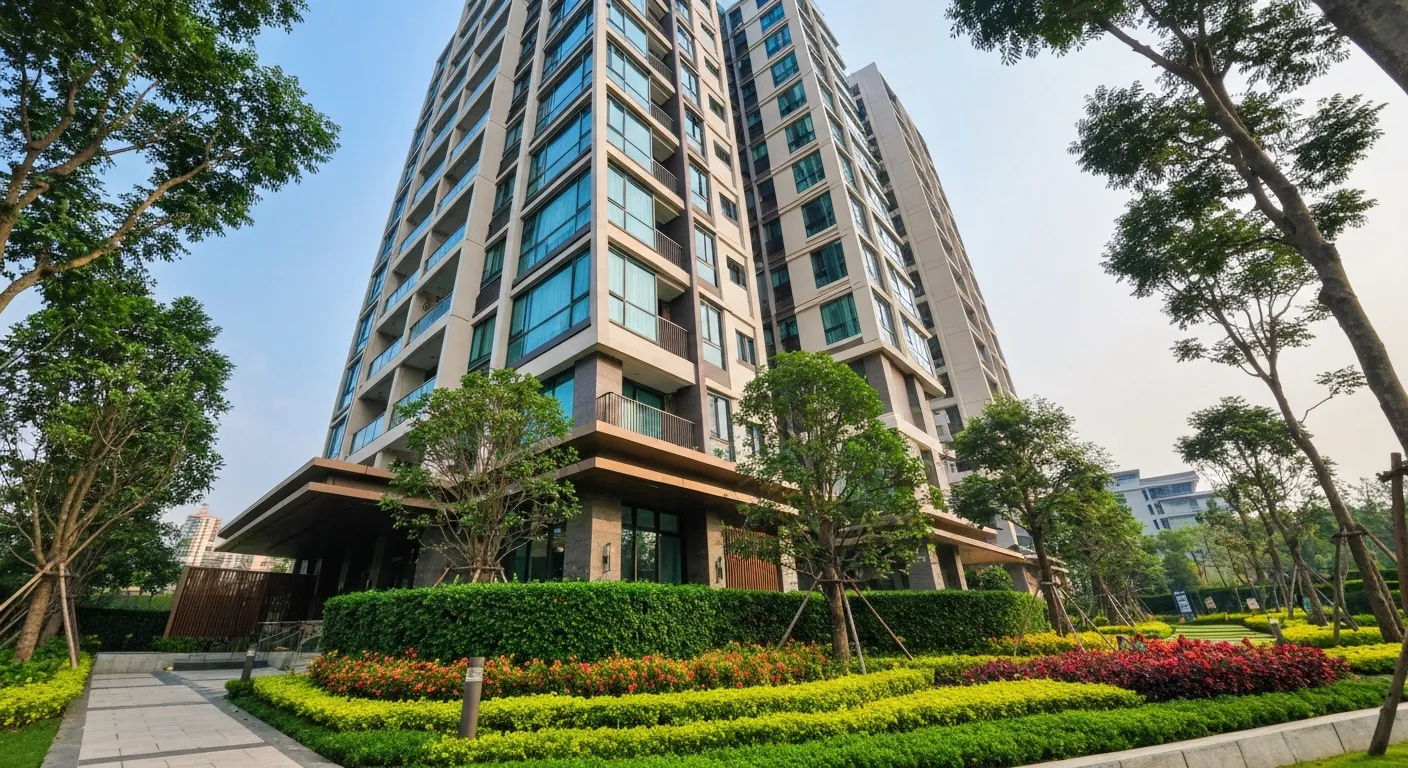
For foreigners, condominiums are the most straightforward type of property to own in Thailand. Thanks to the Condominium Act, you can purchase and hold a “freehold” title for a condo unit, giving you full and direct ownership rights, just as a Thai citizen would have.
This is possible as long as the building adheres to the “foreign quota,” which states that up to 49% of a condo building’s total sellable space can be owned by non-Thais. This makes it simple to own condominiums in your own name.
To make your purchase fully legal and secure, you must meet a few key requirements:
- The funds for the purchase must be transferred from outside Thailand in a foreign currency.
- The condo unit you wish to buy must be within the 49% foreign quota.
- You must obtain a Foreign Exchange Transaction (FET) form from your bank to prove the fund transfer.
Villas and Houses: Leasehold vs Freehold Options
If you have your heart set on a villa or a house with a garden, you might wonder about your options, since you can’t own land. This is where the concept of leasehold comes into play. While you cannot have freehold ownership of the land itself, you can secure it with a long-term lease.
The most common and legally sound method is to sign a lease agreement for the land, typically for a period of 30 years. These agreements are often written with options to renew for two additional 30-year terms, effectively giving you control for up to 90 years.
With a registered lease, you have the exclusive right to use the land. Importantly, you can own the building or house that sits on that land outright. This structure is a very common and secure way for foreigners to enjoy their dream villa in Thailand.
Townhouses, Commercial Real Estate, and Land Use Rights
Beyond condos and villas, foreign investors might be interested in other segments of the property market, such as townhouses or commercial real estate. The ownership rules for these properties are similar to those for houses, relying on indirect control of the Thai land.
Townhouses are usually secured through a long-term leasehold agreement, just like villas. For commercial real estate, many foreign investors choose to set up a Thai limited company to purchase the property. This structure allows the company to own the land and building, while you control the company.
For various property types, your land use rights can be secured in several ways:
- Townhouses: Typically acquired via a registered long-term lease.
- Commercial Real Estate: Often purchased through a legally structured Thai company.
- Undeveloped Land: Acquired for use via a leasehold, though this is less common for individual buyers.
Key Restrictions on Foreign Ownership
Understanding the restrictions is just as important as knowing the opportunities. The limitations on foreign property ownership are rooted in Thai law and are designed to maintain Thai control over its land. Acknowledging these rules is key to a smooth and legal purchase.
The main restriction, as we’ve covered, is the prohibition on direct land ownership. But this also extends to how you can structure alternative ownership methods, like setting up a company. Let’s examine these key restrictions more closely.
Land Ownership Laws for Non-Thais
The cornerstone of Thai property law regarding foreign ownership is the Land Code Act of 1954. This legislation explicitly prohibits foreign nationals from owning land in their own name. This rule is strict and applies to all non-Thais, regardless of their status or the amount they wish to invest.
The purpose of this law is to protect the nation’s most valuable asset-its land-from being controlled by foreign interests. It ensures that the majority of land remains in the hands of Thai nationals.
Therefore, any attempt to purchase a plot of land and register it directly in your name as a foreigner is not legally possible. This is why alternative structures like leaseholds and company ownership were developed and have become standard practice in the Thai real estate market.
Regulatory Limits on Foreign Shareholding
When using a Thai company to purchase land, you must abide by strict regulatory limits. The most important rule is that the foreign ownership quota in a limited company is capped at 49%. This means at least 51% of the company’s shares must be held by Thai shareholders.
Crucially, these Thai partners cannot be “nominee shareholders.” A nominee is someone who holds shares on your behalf without making a genuine financial investment, which is illegal in Thailand. Authorities are vigilant about this, and if a company is found to be a nominee structure, the property can be forcibly sold.
To legally use a Thai company for property ownership, you must remember:
- You can only hold a maximum of 49% of the shares.
- Your Thai partners must be legitimate investors.
- The company should ideally conduct some form of business.
- Using nominees to bypass the law is a serious risk.
Workarounds: Long-Term Lease Agreements and Thai Company Structures
While the term “workaround” might sound risky, these are well-established, legal methods for controlling property in Thailand. The long-term lease agreement is the most popular and secure path for owning a house or villa. When registered at the Land Office, a 30-year lease grants you exclusive rights to the property and is legally protected.
Another option is forming a Thai limited company. This gives the company, which you can direct, the ability to purchase freehold land. However, this path requires careful legal setup to ensure it complies with Thai property law and avoids any issues with nominee shareholders.
For very large investments, the Board of Investment (BOI) offers special privileges that can sometimes include land ownership rights, although this is a niche option. For most people, a registered lease is the simplest and safest way to secure your dream home.
Choosing the Best Location to Buy in Thailand
In real estate, location is everything, and this is especially true in Thailand. The best place for you to buy depends entirely on your lifestyle preferences and investment goals. From the urban energy of Bangkok to the serene beaches of Phuket, the Thai real estate market offers something for everyone.
Choosing the right location can significantly impact your enjoyment and the property’s investment potential. Let’s explore some of the top destinations for foreign buyers and what makes each of them unique.
Why Bangkok Appeals to International Buyers
Bangkok, Thailand’s vibrant capital, is a major hub for international buyers, especially those seeking an urban lifestyle. The city’s dynamic real estate market is dominated by modern condominiums, making it easy for foreigners to find freehold properties. Its world-class public transportation, shopping, and dining make it an exciting place to live.
The investment potential in Bangkok is strong, with a large rental market driven by expatriates, professionals, and a growing population of digital nomads. Property prices vary widely, offering options from affordable studios to luxury penthouses, catering to different budgets.
With its excellent international connectivity and bustling economy, Bangkok offers a fast-paced environment combined with the convenience of city living. It’s an ideal choice if you crave energy, opportunity, and access to modern amenities.
The Allure of Phuket for Expats and Investors
Phuket is often called the pearl of the Andaman, and for good reason. This island paradise is a top choice for expats and investors seeking a blend of laid-back beach life and sophisticated living. Its property market is well-accustomed to foreign buyers, with many experienced real estate agents and lawyers available to assist.
The island’s main draw is its stunning natural beauty, from pristine beaches to lush hillsides. This makes it a hotspot for luxury villas and sea-view condos. The investment potential here is excellent, particularly for properties that can generate rental income from the millions of tourists who visit each year.
With a large and established expat community, international schools, and high-end restaurants, Phuket offers a comfortable and high-quality lifestyle. It’s the perfect spot if you’re looking for a holiday home, a retirement destination, or a profitable investment property.
Emerging Hotspots: Chiang Mai, Pattaya, and Hua Hin
Beyond Bangkok and Phuket, other locations are gaining popularity among foreign buyers. Chiang Mai, in the mountainous north, is known for its rich culture, relaxed pace of life, and affordability, making it a favorite for digital nomads and retirees.
Pattaya, just a short drive from Bangkok, offers a lively atmosphere with a vast selection of condos and a bustling nightlife. Meanwhile, Hua Hin, the royal resort town, provides a more family-friendly and tranquil seaside experience. Each of these hotspots offers unique investment potential with varying property prices.
To help you compare, here’s a quick look at what each city offers:
| Location | Best For | Popular Property Types |
|---|---|---|
| Chiang Mai | Retirees, culture lovers, digital nomads | Affordable condos, houses |
| Pattaya | Weekend getaways, nightlife, investors | High-rise condos, villas |
| Hua Hin | Families, retirees, golf enthusiasts | Beachfront condos, pool villas |
Steps to Buying Property in Thailand as a Foreigner
Ready to take the next step? The buying process for a foreign buyer in Thailand is well-defined. While the legal requirements might seem daunting, following a clear, step-by-step approach will ensure your property purchase is secure and stress-free.
From initial research to finalizing the transfer, each stage is crucial for protecting your investment. Let’s break down the journey of buying property in Thailand, so you know exactly what to expect.
Researching the Market and Identifying Needs
The first step in any property purchase is to do your homework. Before you even look at listings, it’s important to understand the local real estate market and, most importantly, identify your own needs. Are you looking for a vacation getaway, a retirement home, or a property with strong investment potential?
Your goals will determine the right type of property and location for you. A condo in a tourist area might be perfect for rental income, while a quiet villa could be ideal for retirement. Being clear about your objectives will make the rest of the process much smoother.
Ask yourself these key questions to get started:
- What is my budget for the property purchase and ongoing costs?
- Do I prefer a freehold condo or a leasehold villa?
- What kind of lifestyle am I looking for (beach, city, quiet)?
- Is this a personal home or an income-generating asset?
Selecting a Trusted Real Estate Agent and Local Lawyer
Once you know what you’re looking for, it’s time to build your team. Navigating the Thai real estate world is not something you should do alone. A trusted, professional real estate agent who has experience working with foreigners is invaluable. They can help you find suitable properties and understand local market conditions.
Even more important is hiring an independent property lawyer. Do not use a lawyer recommended by the seller or developer. Your lawyer works for you, and their job is to protect your interests.
They will handle all the critical legal requirements, from reviewing contracts to conducting due diligence and ensuring the property title is clean. This is the single most important step you can take to ensure a safe transaction.
Making an Offer, Negotiate, and Sign Agreements
When you’ve found the perfect property, the next step is to secure it. This begins with making an offer and entering into a reservation agreement. This initial agreement, accompanied by a small deposit, takes the property off the market while your lawyer performs due diligence.
After the reservation, the negotiation of the main purchase agreement begins. This is the legally binding contract for your property purchase, so it’s critical that your lawyer reviews every detail. They will ensure the terms are fair and that your rights are protected.
The process typically follows these steps:
- You make an offer on the property.
- You sign a reservation agreement and pay a booking fee.
- Your lawyer conducts due diligence and drafts or reviews the Sales and Purchase Agreement.
- You negotiate the final terms and sign the agreement.
- You pay the main deposit as specified in the contract.
Transferring Funds: Requirements and Documentation
How you pay for your property is extremely important, especially if you are buying a freehold condo. To comply with Thai law, you must transfer the money for your property purchase from a bank account outside of Thailand.
This transfer must be made in a foreign currency, such as US dollars or Euros, not in Thai Baht. When the funds arrive at a Thai bank, the bank will exchange the money and issue a Foreign Exchange Transaction (FET) form or a bank credit note.
This document is crucial. It serves as proof that the funds came from overseas, and you will need to present it at the Land Office to register the condo in your name. Without this form, you cannot legally complete the ownership transfer.
Due Diligence and Title Search Process
Due diligence is a fancy term for “doing your homework,” and it’s one of the most critical phases in the buying process. This is where your lawyer earns their fee. They will conduct a thorough investigation to ensure the property you’re buying is free of any legal or financial problems.
The core of this process is the title search. Your lawyer will check the land title deed at the Land Office to confirm that the seller is the true owner and has the right to sell it. They will also look for any existing mortgages, liens, or legal claims against the property.
Furthermore, they will verify that the property complies with local zoning and environmental regulations. This step is your best protection against scams and future legal headaches, ensuring your investment is built on a solid legal framework.
Finalizing Ownership Transfer at the Land Office
This is the final step where you officially become a property owner. On the agreed-upon date, you or your lawyer will meet the seller at the local Land Department office to complete the transaction. This is where all the paperwork comes together.
At the Land Office, you will pay the remaining balance of the purchase price, along with any applicable taxes and transfer fees. All necessary documents will be submitted, and the officials will update the title deed to reflect the new ownership.
To finalize the transfer, you will typically need:
- Your passport
- The Foreign Exchange Transaction (FET) form
- The signed Sales and Purchase Agreement
- The original title deed from the seller
Once everything is processed, you will receive the updated title deed with your name on it, solidifying your ownership rights.
Financing and Payment Insights for Foreign Buyers
When it comes to paying for your property, foreign buyers need to plan carefully. Getting a mortgage from a Thai bank is challenging, so most foreigners purchase property with cash. This means having your funds ready and understanding the process of transferring them to Thailand.
From navigating foreign exchange transaction rules to choosing the right bank, being prepared financially is key. Let’s look at the financing options available, how to transfer money correctly, and what to consider with currency exchange.
Mortgage Options for Non-Thai Citizens
If you’re wondering about getting a mortgage in Thailand, the reality is that options are limited for non-Thai citizens. Most local banks are hesitant to lend to foreigners who do not have strong ties to the country. As a result, the vast majority of foreign investors pay for their property purchase in cash.
However, it’s not entirely impossible. Some international banks with branches in Thailand, such as UOB or Bangkok Bank, may offer loans to certain foreigners. Eligibility is usually tight and depends on your specific circumstances.
You might be able to secure a mortgage if you are:
- A foreigner with a valid Thai work permit and a stable, high income.
- Married to a Thai citizen who can act as a co-borrower.
- A permanent resident of Thailand.
- An existing high-net-worth client of the bank.
Transferring Money from Abroad: Rules and Best Practices
The process of transferring money for your property purchase is governed by strict legal requirements, especially for buying a freehold condo. Following these rules is essential for a smooth transaction. The most important rule is that the funds must originate from outside of Thailand.
You need to wire the money in a foreign currency, not Thai Baht, to your own or the seller’s account at a Thai bank. When you make the transfer, you should clearly state the purpose of the funds, for example, “for the purchase of a condominium in Thailand.”
Upon receipt, the Thai bank will issue a Foreign Exchange Transaction (FET) form. This document is non-negotiable proof for the Land Office that you have complied with the law. Always double-check with your bank to ensure you receive this crucial piece of paperwork.
Currency Exchange Factors and Bank Recommendations
When making a large property purchase, even small fluctuations in currency exchange rates can make a big difference. The final price of your property in Thai Baht will depend on the exchange rate on the day your foreign currency is converted.
To get the best value, it’s wise to monitor rates and consider using a specialist currency exchange service, which often offers better rates and lower fees than traditional banks. Opening a local bank account in Thailand early in the process can also simplify transactions.
For handling these large international transfers, some banks are known for being more efficient and foreigner-friendly:
- Bangkok Bank: Widely used and has experience with foreign property buyers.
- Kasikornbank: Known for its good service and modern banking platform.
- UOB: An international bank that offers mortgage options to some foreigners.
Taxes, Fees, and Ongoing Costs
The listed price of a property is not the final amount you’ll pay. When budgeting for your real estate investment, it’s essential to account for various taxes, one-time fees, and ongoing costs. These can add a significant percentage to the overall property value.
From the transfer fees and stamp duty paid at the Land Office to annual property tax and maintenance expenses, being aware of these costs from the start will prevent any unwelcome surprises. Here’s a breakdown of what you can expect to pay.
Transfer Fees and Stamp Duties Explained
When you finalize your property purchase at the Land Department, you will need to pay several one-time taxes and fees. The largest of these is the transfer fee, which is 2% of the property’s appraised value. This cost is typically split 50/50 between the buyer and the seller, but this can be negotiated in the purchase agreement.
You will also have to pay either stamp duty or a Specific Business Tax (SBT). Stamp duty is 0.5% of the purchase price. The SBT is 3.3% and is usually charged if the seller has owned the property for less than five years. You only pay one of these, not both.
Finally, there is a withholding tax, which is calculated based on the seller’s status and how long they’ve owned the property. While this is technically the seller’s responsibility, the final distribution of all tax implications is often a point of negotiation.
Annual Property Taxes and Maintenance Expenses
Owning a property comes with recurring responsibilities. One of these is the annual property tax, officially known as the Land and Building Tax. For a primary residence, this tax is often very low or even exempt, depending on the property value. However, it is higher for second homes or properties used for rental income.
In addition to taxes, you will have ongoing maintenance expenses. If you own a condo, you’ll pay a monthly Common Area Maintenance (CAM) fee, which covers the upkeep of shared facilities like pools, gyms, and security. Similar fees apply to villas in gated communities.
Your list of ongoing costs will likely include:
- Annual property tax
- Condo or community maintenance fees
- Property insurance
- Utilities (water, electricity, internet)
- General repairs and upkeep
Tax Implications for Rental Income and Selling Property
If you plan to use your property as an investment, you need to be aware of the tax implications. Any rental income you earn from your property in Thailand is subject to personal income tax. You are required to declare this income and pay the corresponding tax.
When it comes to selling property, there are also taxes to consider. If you sell within five years of purchase, you will likely be liable for a 3.3% Specific Business Tax (SBT). If you sell after five years, you will pay a 0.5% stamp duty instead.
Additionally, capital gains from the sale may be subject to a withholding tax. The exact amount depends on your tax residency status and the specifics of the sale. It’s always best to consult with a tax advisor to understand your obligations and plan accordingly.
Risks, Safety, and Considerations for Foreigners
Is it safe to buy property in Thailand? Absolutely, as long as you are careful and informed. Like any major investment, there are risks involved, but they can be managed with proper planning and professional help. Understanding the potential pitfalls is the best way to avoid them.
From legal red flags to avoiding scams, being a cautious buyer is your best defense. By working with a reputable real estate agent and lawyer, you can navigate the legal requirements and protect your foreign ownership rights. Let’s cover the key considerations to ensure a secure purchase.
Legal Red Flags to Watch Out For
When buying property in a foreign country, it’s easy to make mistakes if you’re not careful. Being aware of the legal red flags can save you from major headaches and financial loss. The most dangerous risks for foreign buyers often involve trying to bend the rules of Thai property law.
Some developers or sellers might suggest “creative” solutions to get around the law, but these almost always come with significant risks. It’s crucial to stick to the established, legal methods of ownership to ensure your investment is safe.
Here are some major red flags to watch out for:
- Suggestions to use illegal “nominee” structures to buy land.
- Pressure to sign contracts that are only in Thai or that you don’t fully understand.
- Unregistered lease agreements or relying on verbal promises.
- Deals that seem too good to be true or involve unusually low prices.
- Skipping a thorough due diligence process to save time or money.
Protecting Your Investment: Insurance and Management
Once the purchase is complete, your job isn’t over. Protecting your new asset is crucial for long-term peace of mind. One of the simplest ways to do this is by getting comprehensive property insurance. This will cover you against risks like fire, theft, and water damage, safeguarding the value of your real estate investment.
If you don’t plan to live in your property year-round, hiring a professional property management company is a wise move. This is especially true for investors who want to generate rental income without the hassle of being a hands-on landlord.
A management company can handle everything from finding tenants and collecting rent to overseeing maintenance and repairs. This ensures your property is well-cared for in your absence and helps preserve your ownership rights and the property’s condition.
Reviewing Contracts and Avoiding Scams
The Sales and Purchase Agreement is the most important legal document in your transaction. It outlines all the terms and conditions of the sale, and you should never sign it without a thorough review by your independent lawyer. This contract is your primary protection against scams and misunderstandings.
Your lawyer will ensure the purchase agreement is clear, fair, and legally binding. Rushing this step or relying on a standard template without a proper review is one of the biggest risks you can take.
Pay close attention to these details in the contract:
- The property details and title number are correct.
- The payment schedule and deadlines are clearly defined.
- All parties’ responsibilities for fees and taxes are specified.
- Protective clauses are included, such as what happens if the due diligence reveals problems.
- Any verbal promises are written into the agreement.
Conclusion
In conclusion, navigating the property market in Thailand as a foreigner can be both exciting and challenging. Understanding the legal landscape, the types of properties available, and the financial considerations is crucial for a successful investment. By doing thorough research, seeking professional guidance, and remaining aware of the potential risks, you can ensure that your property purchase aligns with your goals. Whether you’re looking for a vacation home, a rental investment, or a new residence, Thailand offers diverse opportunities that can lead to a rewarding experience. If you have any questions or need personalized assistance, feel free to reach out for more information!
Frequently Asked Questions
Can foreigners own land or houses outright in Thailand?
No, Thai law strictly prohibits foreigners from having direct freehold land ownership. For houses or villas, foreigners typically use a long-term lease agreement to secure the plot of land or establish a legally compliant Thai company to hold the title, ensuring their ownership rights to the building.
What is the process for buying a condo in Thailand as a foreigner?
To own condominiums, you must find a unit within the 49% foreign quota and transfer funds from overseas in foreign currency. You’ll then sign a purchase agreement, obtain a foreign exchange transaction form from the bank, and complete the registration at the Land Office with a lawyer.
Are there any tax implications for foreigners purchasing property in Thailand?
Yes. When buying, you’ll pay a transfer fee and stamp duty. Annually, a property tax may apply. If you earn rental income, it is subject to income tax. When selling property, you may face capital gains withholding tax and a specific business tax depending on the ownership duration.